Do you feel like your wheelchair reflects your personality? Or does it feel like a barrier to being seen for who you really are? Your wheelchair doesn’t have to be just a medical necessity, nor do you have to be bound by its clinical appearance. You certainly don’t have to feel self-conscious using it.
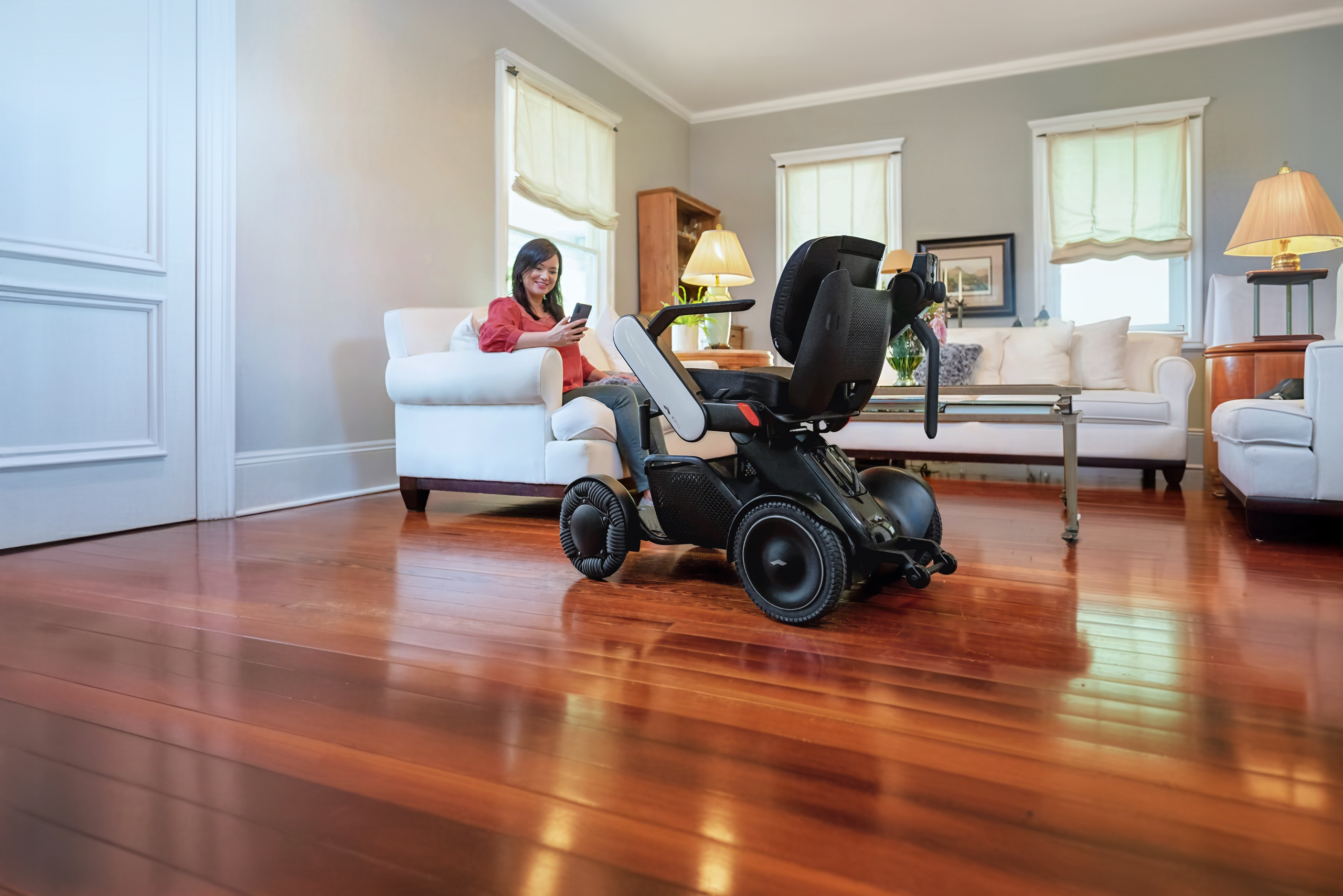
To feel confident, your device not only needs to be ergonomically comfortable, but it should also reflect your personal style. It’s time to reframe your mindset and see it as a fashion accessory. Modern aesthetics, materials, and smart features are improving wheelchair functionality while actively changing public perception.
Change how others see you — and how you see yourself — by understanding this evolution.
How Wheelchair Design Has Improved
Just because wheelchair design has an ancient history doesn’t mean users need to remain defined by their purely functional and often clinical past. For decades, most designs came from a medical mindset, mainly built to just work and not to represent the person using them. While they were reliable, they also carried a message that many users felt deeply. They felt the equipment mattered more than themselves.
Today, that’s changing. Wheelchair design is shifting from one-size-fits-all models to a user-centric philosophy where identity is valued as much as practicality. Modern wheelchair design is sleeker and lighter with customizable options. Frames can be colored. Components can be swapped. Accessories can be added. Features can be integrated. Users can break away from the institutional monotony of traditional wheelchairs.
This evolution is even influencing public symbols and signage. Activists have pointed out an opportunity to tweak the traditional wheelchair icon by incorporating a figure leaning forward. Even the slightest design changes can reinforce wheelchair users as active participants and not sidelined observers.
The impact of wheelchair designs extends beyond their appearances. For instance, traditional models could leave their users feeling defined by their disability and as if the device spoke louder than their personality. Modern models do the opposite. When users can choose how their chair looks and feels, it becomes part of their personality and not something that overshadows it.
The Fusion of Style and Technology
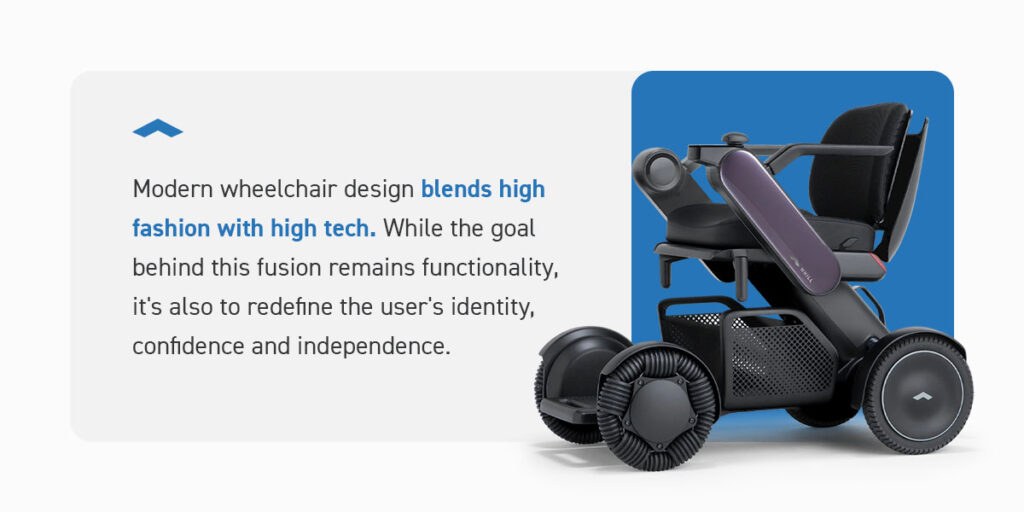
Modern wheelchair design blends high fashion with high tech. While the goal behind this fusion remains functionality, it’s also to redefine the user’s identity, confidence, and independence.
Sleek Design and Customization
The most significant change in modern mobility design is the deliberate shift away from the sterile and institutional look of traditional wheelchairs. Leading manufacturers aim for more minimalist, almost Apple-esque aesthetics. Today, customization options can include:
- A broad selection of colors, powder coatings, and vinyl wraps.
- Premium materials like carbon fiber, titanium, and anodized aluminum.
- Tailored frame shapes and patterns and wheel designs.
- Subtle accent LED lighting for safety and aesthetics.
- Upholstery options that range from fabrics to leather.
Cool wheelchair design is not superficial. When your mobility device looks cool rather than clinical, it fundamentally changes how the world interacts with you and how you feel about yourself.
Advanced Materials and Portability
A daily struggle with mobility device independence is weight. Every extra pound users have to lift, push, or maneuver steals energy and opportunity. Newer chairs can help solve this problem. Here are real material breakthroughs of modern wheelchair design:
- Carbon fiber frames that help reduce total weight while staying strong.
- High-quality aluminum alloys and titanium hardware.
- One-hand folding capabilities and quick-release components.
- Lighter batteries and motors that offer longer ranges.
When a power chair weighs the same as a typical suitcase and disassembles or folds in seconds, many doors open. You may be more open to spontaneous travel or social outings. This has a profound emotional impact. A lighter and more maneuverable device equals more life lived on your terms.
Smart Features and Controls
Modern mobility devices are also becoming more technologically advanced. They’re increasingly integrating intelligent systems that offer more convenience and safety for users. Some notable smart features include:
- Comprehensive smartphone app control.
- Smart joysticks and touchpads.
- Multi-sensor obstacle-detection systems.
- Gyroscopic stabilization and traction control.
- Automatic fall detection with emergency alerts.
- GPS tracking and geo-fencing.
The less mental energy you use avoiding accidents or wrestling with controls, the more you can focus on living. You can focus more on conversations, experiences, and simply being present.
How Better Design Builds User Confidence
There are four interconnected ways that a better wheelchair design builds your confidence — let’s discuss them:
- It changes first impressions: Sleek designs, premium materials, and modern aesthetics all work together. The attention shifts from the disability to the personality. Strangers will most likely notice the design before the chair itself. That single shift reduces that awkward sympathy and replaces it with simple eye contact.
- It feels like an extension: A better design feels more like an extension of you than a medical device. All the customization options available will help make the chair feel emblematic of your personality. And when the device reflects your tastes rather than a medical catalog, you can stop feeling defined by it and start feeling enhanced instead.
- It removes daily friction: The various smart power chair features enhance maneuverability. This means fewer moments of struggling. Every time the chair handles a curb, crowded stores, and steep ramps without drama, it quietly reinforces your confidence in mobility and independence. It is essentially an accumulation of small wins.
- It allows for social connection: Improved wheelchair design and personalization also serve as an immediate conversation starter. Some people may be uncomfortable or unsure about acknowledging mobility devices, but unique accents and accessories open the door for connections across the spectrum. Destigmatizing the devices themselves also creates greater opportunities for education and awareness.
| Category | Traditional Wheelchair Design | Modern Wheelchair Design | Impact on Public Perception |
|---|---|---|---|
| Aesthetic | Clinical, institutional appearance | Sleek, minimalist, lifestyle-focused design | Shifts focus from disability to personality |
| Materials | Heavier steel frames | Carbon fiber, titanium, anodized aluminum | Signals innovation and modern engineering |
| Customization | Limited options | Color choices, frame styles, upholstery, accessories | Encourages self-expression and identity |
| Technology | Basic manual or simple controls | Smart apps, joystick upgrades, obstacle detection | Positions users as empowered and tech-enabled |
| Portability | Bulky and heavy | Foldable, modular, lightweight builds | Supports independence and active lifestyles |
| Social Impact | Reinforced medical stigma | Blends fashion, tech, and mobility | Reduces stigma and increases social engagement |

Experience the Future of Personal Mobility With WHILL
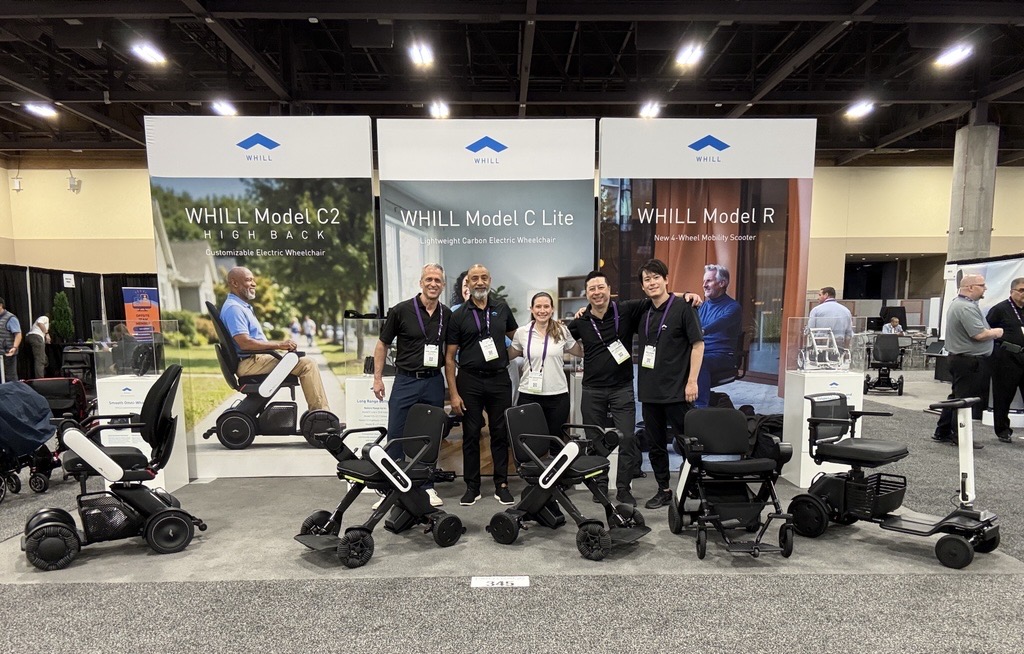
A power chair should never force you to choose between function and identity. It should celebrate both. That’s why WHILL was founded to create mobility devices that transform the traditional wheelchair experience. We blend sleek, modern aesthetics with cutting-edge technology to help build confidence and provide the best user experience.
Our power chairs can be personalized and customized to reflect your needs and style. Each model offers portability, terrain stability, an advanced battery, and effortless maneuverability, while the Model C2 also has patented omnidirectional wheel technology. You can even tailor your ride with one of three drive modes via the smartphone app. Our accessories and optional parts further personalize your electric wheelchair, from cushioned arm pads to stick-type controllers.
Find your closest retailer to test-drive our power chairs or shop online. Discover how user-centric technology can transform your confidence and your journey. Our devices are as beautiful and unique as the people who use them.